From cowboy city to circularity
- Frontpage
- About Bellagroup
- People
- Jan Hoff-Hansen

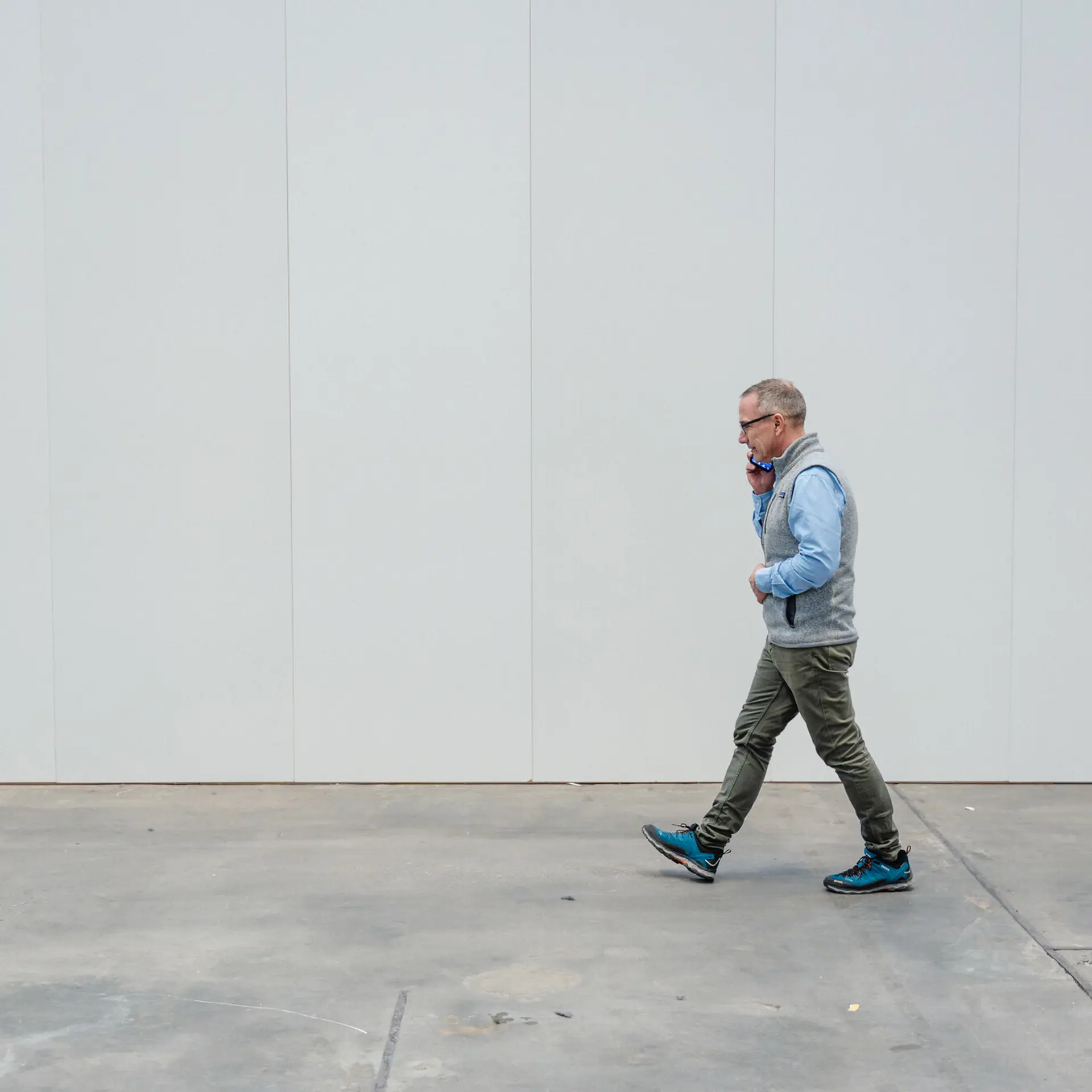
In the Operations department at Bella Center Copenhagen, sustainability isn’t a separate track – it’s the way the house is run. For Director of Operations Jan Hoff-Hansen, circular solutions are about far more than CO2 reductions.
“For me, circularity is really about working smarter,” he says: “It’s about doing things in a way that benefits our people, our clients, and our venue at the same time.”
“If you go 15 years back, Bella Center Copenhagen during events was what I called a ‘cowboy city’. Everything was built from scratch with wooden facades – like something from a Western – and then torn down again afterwards,” he says: “Today, we think in modularity. It makes us more sustainable, but it also makes us far more efficient because we can reuse elements again and again across the venue.”
This circular mindset has become a natural part of the operation’s DNA. New investments are evaluated not just on cost, but on whether they can be reused, shared across teams, and adapted for different purposes. Just as importantly, they’re assessed on how they support employees in their daily work.

Step by step, these solutions are becoming more visible in the daily flow of Bella Center Copenhagen; from BeMatrix modules that allow stand designs to be reconfigured endlessly, to strategic thinking in the event design department, where material use is reduced and guest experience improved by using smaller carpet sections for wayfinding instead of covering entire areas. You might come across the waste-sorting train making its rounds, rented solutions replacing single-use materials, or inventory being passed on to the Red Cross or Sydhavns Genbrugscenter for a second life rather than facing a fate at a landfill.
“If you go 15 years back, Bella Center Copenhagen during events was what I called a ‘cowboy city’."
“When something no longer works for us, it doesn’t mean it has no value. These cases show how creativity and circularity meet in the daily operation of the venue,” he says: “It’s circularity beyond our own walls.”

Designers, architects, technicians, and production teams collaborate closely to create solutions that are sustainable, functional, and practical – a combination that has become a hallmark of Operations. Asking Jan about his favorite circular initiative is a lost cause:
“I have five departments, each working on their own circular projects. It’s like choosing between my children,” he laughs.
"It’s about doing things in a way that benefits our people, our clients, and our venue at the same time.”
One thing is the practical solutions. But when asked how these approaches take hold among colleagues, Jan smiles and says:
“We all know culture eats strategy for breakfast,” before he adds: “Luckily, circular thinking isn’t a side project or a strategic add-on; it’s part of our DNA. When solutions are smarter, responsible, and more flexible, motivation follows naturally.”
